Best Fence Materials for the Upper Cumberland Climate
Wood, vinyl, chain link, iron, and farm fence compared for Upper Cumberland conditions: humidity, freeze-thaw, and cherty ground that fights a post hole.
The Upper Cumberland isn't one climate or one type of ground. It's rocky plateau soil in Cookeville, karst and sinking streams around Livingston, heavy nursery ground in McMinnville, and higher elevation with more snow once you get up to Crossville. The material that holds up best on one job can be the wrong pick two counties over. Here's how we think about it, region by region.
Why Terrain and Soil Drive the Material Choice Here
| Material | Best fit | Worth knowing |
|---|---|---|
| Wood | In-town privacy and curb appeal, rural yards inside a larger property | More upkeep than vinyl or iron, but easy to repair a section at a time |
| Vinyl | In-town Cookeville lots and newer subdivisions | Does not rot or need repainting, and its uniform look tends to clear architectural review more easily |
| Ornamental iron | Pool and safety enclosures needing a clear sightline, older established neighborhoods | Suits historic-district settings, though those districts may add a review step |
| Split-rail and farm | Acreage, livestock containment, nursery growing ground | About linear footage and containment rather than decoration |
| Chain link | Side yards, dog runs, commercial lots | Post spacing is more flexible than solid panel fencing, so it suits rockier soil |
Cookeville and most of Putnam County sit on the Bodine-Baxter-Mountview soil association, which means rocky, cherty subsoil. Post holes take longer and hit rock more often than they would in the Nashville Basin. That doesn't rule out any material, but it changes how we set posts, and it's part of why we always walk the line before quoting anything.
Overton County, around Livingston and Hilham, is a documented karst region with real sinkholes and sinking streams. Karst ground can mean voids or soft spots that don't show up until you're digging. We check for that kind of ground movement before recommending a post-set method.
White County is different again. It's a serious cattle county, ranked #14 in Tennessee for cattle sales, and most of the land in the county is in active farms. That's a fencing job about containment and acreage, not curb appeal, and it points toward different materials than a quarter-acre in-town lot does.
Wood Fencing: The Default for a Reason
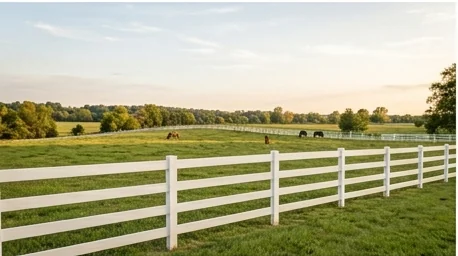
Wood fencing is a common choice across the region, and for good reason. It works in-town for privacy and curb appeal, and it works on rural acreage where a family wants a defined yard without the cost of running the whole property line. Wood needs more upkeep than vinyl or iron over the long run, but it's easy to repair a section at a time, which matters when a tree limb comes down or a post gets knocked loose. In the rockier ground around Cookeville, setting wood posts correctly takes more care and more time, and that's part of how we approach the install, not an excuse to cut corners.
Vinyl Fencing: Low Maintenance, Good Fit for In-Town Lots
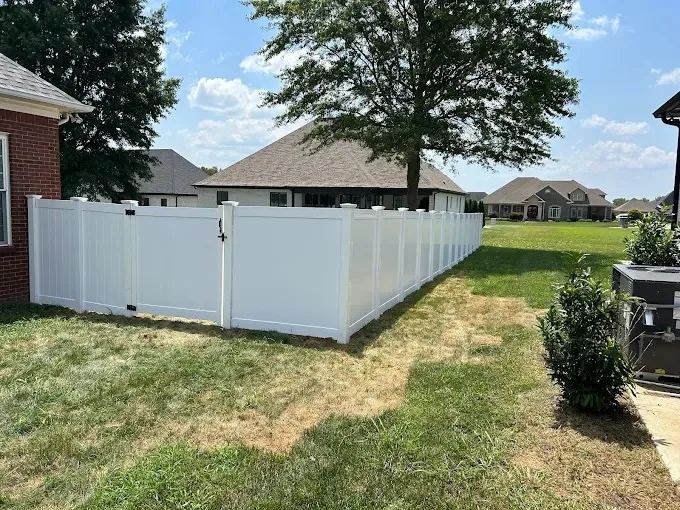
Vinyl fencing doesn't rot, doesn't need repainting, and holds up well through the freeze-thaw swings the Plateau gets in winter. It's a strong fit for in-town Cookeville lots and newer subdivisions where owners want a clean look without ongoing maintenance. One thing to check before you commit: if you're in a community with an architectural review process, vinyl's uniform look tends to clear approval more easily than mixed or irregular materials. Check with your HOA or the city planning department first either way.
Ornamental Iron: Built for Visibility and Historic Character
Ornamental iron fencing fits two situations well: pool and safety enclosures where code requires a clear sightline, and older, established neighborhoods where the look of the house calls for something more traditional than wood or vinyl. Cookeville's historic zoning districts, including North Dixie Avenue, East Broad and Freeze Street, Cream City, and East 8th Street are both good examples of the second case. We don't know of a published fence-specific ordinance for either district, but any property in a historic district should check with the city planning department before installing anything, iron included. Sparta is a step further along on this front: its Commercial Historic District around Liberty Square has an active Historic Zoning Commission, and new construction there requires a Certificate of Appropriateness. That's a real approval step, not a formality, if your project touches that district.
Split-Rail and Farm Fencing: Built for Acreage, Not Curb Appeal
Once you're outside the city limits, especially in the cattle country around White County and the working farmland in Putnam County, the calculation changes. Split-rail and farm fencing is about linear footage and containment, not decoration. McMinnville and Warren County add a wrinkle worth knowing even if you're not a nursery operator: Warren County is known as the Nursery Capital of the World, with hundreds of wholesale nursery and greenhouse operations. Fencing on that kind of ground usually has to do double duty, keeping livestock or equipment out of growing rows while protecting specimen and ornamental trees that represent real inventory. That's a different job than a backyard privacy fence, and we plan material and layout around it.
Chain Link: The Practical, Budget-Conscious Option
Chain link fencing remains the most practical choice when the goal is a secure boundary without the cost of a full privacy fence, think side yards, dog runs, or commercial lots. It also holds up fine in rockier soil since post spacing is more flexible than with solid panel fencing.
What Actually Drives the Cost of Any of These
The material itself is one part of the cost. The bigger factors are total linear footage, how many gates you need, and how hard the terrain is to dig. A flat, cleared lot in town is a different job than a rocky, wooded line on the edge of the Plateau, or a fence that has to cross a sinkhole-prone stretch in Overton County. Elevation matters too. Crossville and the rest of Cumberland County sit at some of the highest elevation in the region and see a lot more snow each winter than Cookeville does, which affects install timing more than it affects material choice. We walk every property before quoting anything, because the honest number depends on what's actually on your land. Our fence cost guide covers the factors in more detail, and a free on-site estimate is the fastest way to get real numbers for your property.
One Regional Rule Worth Knowing Before You Buy Materials
If you're building in Fairfield Glade, in Cumberland County, know this going in: the Fairfield Glade Community Club POA requires Architectural Control Committee approval before any fence goes in, and above-ground electric fencing is banned outright, no exceptions. That's one of the clearest, most specific rules we've come across in the whole region, and it applies regardless of which material you pick. If you're in that community, get ACC approval lined up before you settle on a material, not after.
Common Questions
Which material lasts longest in this climate?
Vinyl and ornamental iron generally need the least upkeep over time. Wood lasts for decades when it's maintained, but it does need that maintenance, staining, sealing, occasional board replacement, especially given the freeze-thaw cycles the Plateau sees each winter.
Does rocky soil rule out any material?
No. It changes how we set posts and how long that part of the job takes, but every material we install can be set correctly in Bodine-Baxter-Mountview soil or similar rocky ground. It's a planning issue, not a disqualifier.
Do I need a permit before choosing a material?
It depends on the county and whether you're inside city limits. Requirements really do vary from one Upper Cumberland county to the next, from full county building codes to counties that have opted out of one entirely. Ask us when we walk your property and we'll tell you what applies to your address.
Can you help if I'm not sure which material fits my property?
That's most of what the first visit is for. We look at your terrain, your goals (privacy, containment, curb appeal, pool safety), and any HOA or historic-district rules that might apply, then recommend a material that fits all three.
How We Work
We start with an on-site walk of your property, not a phone quote. That's the only way to account for soil, slope, existing gates, and anything unusual about the line itself. From there we recommend a material based on what the property and your goals actually call for, not a default. Once a material's picked, our installation crews handle the layout, post-setting, and build, and if something needs fixing down the road, our repair team handles that too, along with gate installation and repair for any entry points your fence needs.
Call us at (931) 651-8856 or text that same number to set up a free on-site estimate. You can also reach us at hello@cookevillefenceco.com or through our contact page and we'll get back to you with next steps.
Related guides: permits and codes across the region, drainage and erosion considerations, installing fence on sloped terrain.
Request a Free Estimate
Fill this out and we'll get back to you, or call or text (931) 651-8856.