Sparta's Certificate of Appropriateness: What It Means for a Fence Near Downtown
Sparta's Certificate of Appropriateness: What It Means for a Fence Near Downtown - a guide from Cookeville Fence Co., serving the Upper Cumberland region of ...
Most fence projects in White County don't touch historic zoning at all. But if your property sits inside Sparta's Commercial Historic District, centered on Liberty Square, the process looks different from a standard permit pull. Sparta has an active Historic Zoning Commission, and it requires a Certificate of Appropriateness (COA) before you rehab a structure, build new, or demolish anything within the district's boundaries. A fence tied to a building or lot in that district can fall under that review. Repair work is covered on fence repair in Sparta.
This isn't a rule we're guessing at. It's a documented local process, and it's worth understanding before you order materials or set an install date.
What a Certificate of Appropriateness Actually Covers
A COA is a sign-off from the Historic Zoning Commission confirming that changes to a property in the district fit the character of the area. The commission's stated scope covers rehabilitation of existing structures, new construction, and demolition. Fencing tends to fall into that first category when it's part of a property's street-facing appearance, particularly on lots facing Liberty Square or elsewhere inside the mapped historic boundary.
We can't tell you exactly which fence styles, materials, or heights the commission has approved or rejected in the past. That level of case-by-case detail isn't part of the published record we're working from. What we can tell you is that the review process exists, it applies to properties in the district, and skipping it on a project that needs it can mean redoing work or facing a stop-work order partway through.
Why This Matters More in Sparta Than in Most Nearby Towns
A lot of towns in this part of the Upper Cumberland have an old downtown core with no formal review process attached to it. Sparta is different. Its Historic Zoning Commission and COA requirement are a real, defined layer of local government, not an informal expectation.
That's worth knowing if you're comparing Sparta to other historic downtowns on our service map. Some towns have an old core with no formal review process at all. And even where a city does have a historic district, we can't assume it has a documented commission-and-certificate process like Sparta's. If your property is anywhere near a historic downtown core, regardless of which town, call the local planning office before you order materials. That's the safest first step.
If your property is outside the mapped Commercial Historic District, this process doesn't apply to you. Most residential fencing in Sparta and the surrounding parts of White County goes through the standard channel. That's the White County Building Inspector for unincorporated areas, or the City of Sparta Planning & Zoning department for in-town projects. The COA process is specific to the historic district itself.
Our Approach on a Historic District Job
- Confirm the lot's status. Check with the property owner whether it falls inside the mapped Commercial Historic District.
- Contact the commission or planning office. Find out what documentation or plans they want to see before work begins.
- Gather the specs. We supply material specs, post spacing, and layout drawings for the review.
- Order materials last. Start with the conversation, not a materials order.
When we're asked to quote or install a fence anywhere near Liberty Square or within the historic district boundary, we start by confirming with the property owner whether the lot falls inside the mapped district. If it does, we recommend contacting the Historic Zoning Commission or the city's planning office directly to find out what documentation or plans they'll want to see before work begins. We don't submit COA applications on a homeowner's behalf, but we can provide the material specs, post spacing, and layout drawings a commission typically asks for as part of that review.
From there, material choice matters. A wood fence or an ornamental iron fence tends to read as more in keeping with an older downtown streetscape than something like chain link, simply because those materials have a longer history in residential and commercial settings of this era. That's a practical observation, not a claim about what the commission specifically requires. We don't have a published materials list to point to. If you're still deciding between styles, our fence cost guide for Tennessee breaks down what different material choices typically involve.
What This Means for Farm and Rural Properties Outside the District
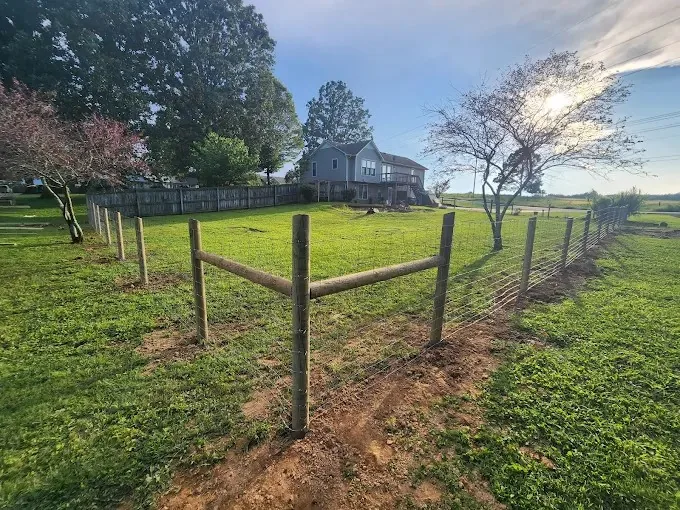
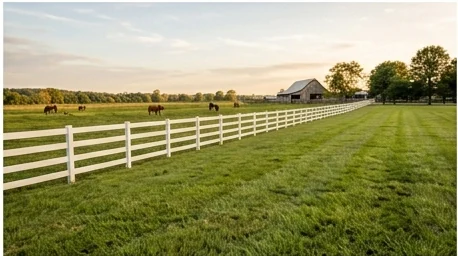
White County's economy leans heavily on agriculture, and the county ranks among the top cattle-producing counties in the state, with 815 farms on about 107,000 acres. If your property is out in the county rather than inside Sparta's historic core, none of the COA process applies. A split-rail or farm fence project goes through the standard county building inspector process instead. The historic district rules are specific to downtown Sparta, not countywide.
Rock Island and the Rest of White County
Rock Island, which sits near the state park at the confluence of the Caney Fork, Collins, and Rocky Rivers, doesn't carry any documented historic-district fence rule of its own. Fencing there follows the general county process rather than anything tied to Sparta's Liberty Square district.
Before You Start
If your project touches the Commercial Historic District, start with a conversation with the Historic Zoning Commission or Sparta's planning office, not a materials order. Once you know what the COA review expects, we can help you plan a fence or gate that fits both the property's needs and the district's review process. For everything outside the historic core, our normal installation process applies. Reach out any time to talk through a project, whether it's a historic district property or a farm fence out in the county.
Request a Free Estimate
Fill this out and we'll get back to you, or call or text (931) 651-8856.