Fence Line Drainage and Erosion Considerations
Fence Line Drainage and Erosion Considerations - a guide from Cookeville Fence Co., serving the Upper Cumberland region of Tennessee.
A fence has to deal with water whether it was built to or not. Rain runs off roofs, driveways, and slopes, and a lot of it moves along property lines, right where fences live. Ignoring drainage during planning is one of the most common reasons a fence fails early. That shows up as leaning posts, washed-out gate approaches, or a section that stands in water after every storm.
This guide covers the basics of thinking through drainage and erosion before and during a fence installation, no matter the material or region.
Why Water Is a Bigger Threat Than Wind
Most people worry about wind when they think about fence durability, but water causes more slow, cumulative damage. Wind failures are sudden and obvious. Water failures happen over months or years. Soil erodes from around a post base, the post loses its bearing support, and it starts to lean. By the time it's visibly crooked, the damage has usually been building for a long time.
Water problems along a fence line generally come from one of three sources: sheet flow across a yard during heavy rain, concentrated runoff from a downspout or driveway, or a natural low point where water collects and drains slowly. Each needs a different response.
Grading Before You Set Posts
Deal with drainage before any posts go in the ground. Walk the fence line during or right after a hard rain and you'll see where water actually moves, which tells you more than a dry-day look at the yard ever will. Low spots, existing erosion channels, and areas where grass won't grow are all signs of a drainage pattern already in motion.
If the fence line crosses a natural swale or low area, decide in advance whether the goal is to let water pass under or through the fence, or to reroute it. Trying to dam water with a solid fence panel is a common mistake. It just redirects the problem, often onto a neighbor's property or back onto your own foundation.
Post Depth and Concrete in Wet Soil
Posts set in areas with poor drainage face a higher risk of frost heave in winter and rot or rust at the base year-round, depending on material. A few practices help regardless of fence type:
- Set posts below the frost line for the region, not just deep enough to feel stable on install day.
- Use gravel at the bottom of the post hole before concrete, so water has somewhere to drain instead of pooling against the post.
- Crown the concrete at grade so it sheds water away from the post instead of holding a puddle around it.
- For wood posts, use one rated for ground contact. Wood in consistently damp soil rots fastest.
Materials matter here. Vinyl fencing and ornamental iron fencing handle wet ground differently than untreated wood, and the right choice often depends on how much standing water or splash-back a particular section of fence line actually deals with.
Gate Approaches Are the Most Common Failure Point
Gates take the brunt of drainage problems. They usually sit at the lowest, most trafficked point of a fence line, and the ground underneath gets compacted from foot and vehicle traffic. Compacted soil doesn't absorb water well, so gate approaches often become the muddiest, most erosion-prone spot on the whole property.
A gravel or paver pad under a gate swing area helps water drain instead of turning the approach into mud. It protects the gate too. A gate that drags through standing water or soft ground wears out its hinges and hardware faster than one with a stable, well-drained base. If you're planning new gates or having existing ones repaired, ask about the ground prep underneath, not just the hardware. See our gate installation and repair page for more on what a proper gate setup involves.
Sloped Property and Fence Line Design
On sloped ground, a fence installed in a straight, level run leaves gaps under the fence on the downhill side and buries the bottom rail on the uphill side. A few standard approaches handle this, and the right one depends on the slope and the material:
- Racking: angling each panel to follow the slope, keeping a consistent gap at the bottom. This works well for many wood and some vinyl systems.
- Stepping: installing panels level in short sections that step down the hill, leaving a small gap under each panel. This is common for chain link and some rigid panel systems.
- A combination of grading and either method, where minor regrading reduces how much the fence has to compensate for.
Whichever method you use, the goal stays the same: keep water from getting trapped against the fence line, and keep the bottom of the fence out of standing water after rain.
Erosion Around Farm and Livestock Fencing
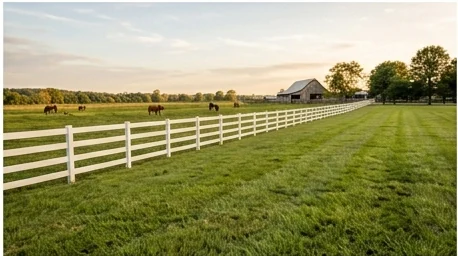
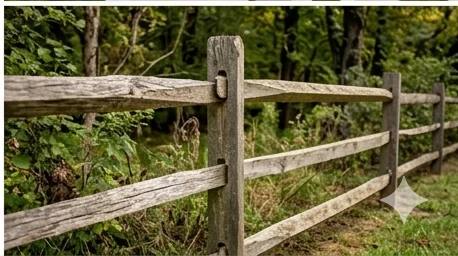
On rural and agricultural properties, erosion often shows up along fence lines that run through pastures or low-lying grazing areas. Livestock traffic compacts soil along a fence the same way foot traffic does at a gate, and that compaction plus water flow can undercut posts over time, especially where animals congregate near a fence line for shade or water access. Space posts appropriately and choose a layout that doesn't funnel animal traffic into a single low corridor, and you'll cut down on this over the life of the fence. Our split rail and farm fencing page covers layout considerations specific to agricultural use.
Maintenance Checks Worth Doing Twice a Year
Drainage conditions change over time as yards settle, landscaping matures, and gutters or driveways get added or altered. A simple twice-a-year check catches problems early.
- Walk the fence line after a heavy rain and note any spots where water pools against posts or panels.
- Check gate bottoms and hinges for dragging or added resistance, a sign the ground underneath is shifting.
- Look for new erosion channels, especially near downspouts, driveways, or any recent landscaping changes.
- Check post bases for movement or leaning, which often shows up first at the lowest point of a slope.
Catching drainage problems early is almost always cheaper than fixing a fence after posts have failed. If you're noticing standing water, leaning posts, or gate problems along an existing fence line, our fence repair team can take a look and tell you whether it's a drainage fix, a fence fix, or both.
Planning a New Fence With Drainage in Mind
If you're planning a new fence and know your property has drainage challenges, mention it up front. A good fence installation plan accounts for slope, soil type, and existing water patterns before the first post hole is dug. That saves time and prevents problems later. For a sense of how site conditions can affect a project, our fence cost guide covers some of the variables that go into a quote.
Every property is different, and the right drainage approach depends on the specific site. If you'd like a second set of eyes on a fence line with drainage concerns, call us for a free estimate and we can walk the property with you.
Request a Free Estimate
Fill this out and we'll get back to you, or call or text (931) 651-8856.